Caramelized Onion and Gruyère Tart
Highlighted under: Oven-Baked Delights
We made Caramelized Onion and Gruyère Tart and I’m sharing exactly how it turned out in our kitchen, including the little details that mattered. I’ll walk you through what to prep first, where to slow down, and the cues we watched for so you can get the same texture and flavor at home. If you’re making this for the first time, I’ll point out the common spots where things can go off track and what we did to fix them.
We tested Caramelized Onion and Gruyère Tart in our kitchen and focused on the steps that actually change the final texture. I paid attention to the key moment where the mixture looks and smells “right,” because that’s what kept the result consistent. If you follow the timing and watch the visual cues instead of guessing, you’ll avoid the most common mistake and get a clean, flavorful finish.
When we made it again, I adjusted one small detail to make it even more reliable, and it made a big difference. I like to prep everything before starting so the process stays smooth, and I keep an eye on heat and doneness cues rather than the clock alone. If yours needs a quick fix, I’ll mention the easiest way to bring it back on track.
Onion caramelization: timing, heat and tools
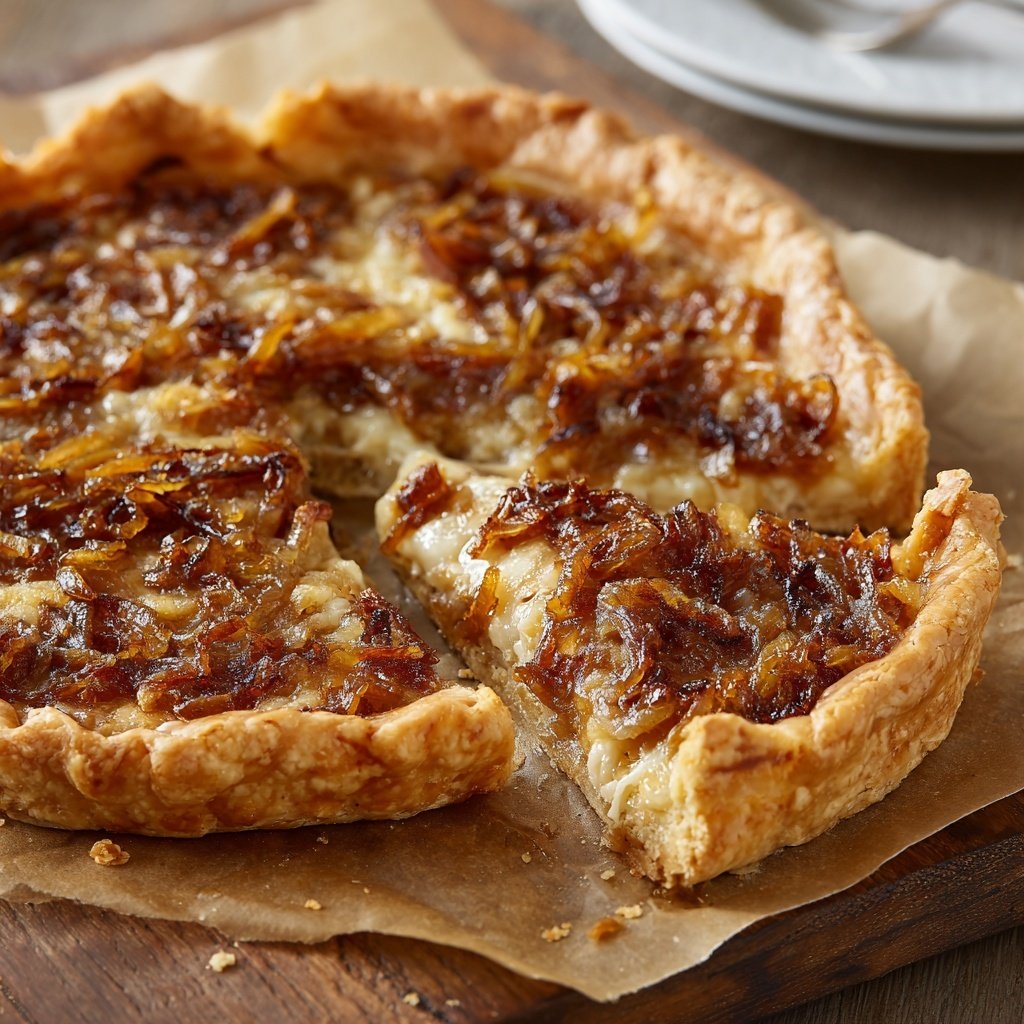
For this tart the onion step determines texture and sweetness: slice onions 1/8–1/4 inch thick so they wilt evenly, then cook over medium-low heat in a wide stainless or heavy-bottomed skillet. Use 30–45 minutes for classic deep-brown caramelization—start at medium to render moisture, then reduce to low once juices evaporate. Stir every 3–5 minutes at first, then more often as they brown. Visual cues: glossy, deep amber color with sweet aroma and no opaque white bits remain.
Select fat and salt carefully: a mixture of butter and neutral oil (about 1:1) gives flavor without burning; add salt early to draw moisture. If you want a touch more sweetness and faster browning, stir in 1–2 teaspoons of brown sugar around the 20-minute mark. Use a heat-resistant spatula to scrape fond from the pan; the browned fond contributes flavor when deglazed with a tablespoon of wine or sherry vinegar before assembling the tart.
Crust, prebake and assembly details
Preventing a soggy bottom starts in the shell: chill your tart dough at least 30 minutes before blind-baking, press it into a 9-inch fluted tart pan and dock the base lightly. Blind-bake at 375°F (190°C) with pie weights for 12–15 minutes until edges are golden and the base looks set. Remove weights and bake an additional 5–7 minutes until base is dry. If you prefer an extra barrier, brush warm prebaked crust with beaten egg white and return to the oven for one minute to seal.
When assembling, distribute caramelized onions evenly and top with finely grated Gruyère so it melts uniformly; reserve a tablespoon to sprinkle on top for browning. For the custard, a typical set is achieved with roughly a 2:1 cream-to-egg ratio by volume in a 9-inch tart, though your mix should pour easily and not overflow—fill to about 1/4 inch below the rim. Bake at 350°F (175°C) until the center barely jiggles, about 25–30 minutes; edges should be nicely golden.
Cheese choice, grating and flavor balance
Gruyère brings nutty, savory depth and a supple melt that gives the tart a silky bite; grate it fine for an even melt and to avoid clumps that sink. Because Gruyère has moderate salt, taste your caramelized onions before seasoning the filling to avoid over-salting. For a slightly creamier mouthfeel, mix 75% Gruyère with 25% young Comté. For more tang, add a tablespoon of grated Parmesan folded into the base before pouring the custard.
If you need substitutions, choose cheeses that match Gruyère’s melting quality: Emmental or Raclette work well; aged cheddar will be sharper and alter the flavor profile. For a vegetarian version check for vegetarian rennet Gruyère or use a blend of Emmental and a high-quality vegetarian salt. For a dairy-free swap, use a firm, oil-based vegan cheese that browns and a starchy binder (1–2 teaspoons chickpea flour) in the custard to help it set, while noting the texture will be different.
Troubleshooting common issues
If your crust turns out soggy despite blind-baking, the most reliable fixes for future bakes are longer prebake time and sealing the base. After removing weights, bake another 5–8 minutes until the base looks matte and dry. For immediate salvage, transfer the baked tart to a very hot oven (425°F/220°C) for 5–7 minutes on a lower rack to help evaporate moisture, watching closely so the edges don’t burn. A thin layer of fine breadcrumbs or semolina before filling also absorbs excess moisture.
If the filling is runny after baking while the edges are brown, lower the oven to 325°F (160°C) and continue baking for 8–15 minutes until the center firms; cover the edges with foil if they brown too much. Overly wet onions are often the culprit—next time cook them longer off heat to remove moisture, or drain them briefly in a fine-mesh sieve before combining with the custard. If onions taste bitter from over-browning, stir in a teaspoon of balsamic or sherry to balance.
Make-ahead, storage and reheating
Caramelized onions can be made up to four days ahead and stored in an airtight container in the fridge; they also freeze well for up to three months in portions. Reheat gently in a skillet over low heat to restore silkiness, adding a splash of water or vinegar if they’ve tightened. Preparing onions in advance reduces same-day cook time significantly and improves flavor meld when the tart rests before serving—just cool completely before refrigerating to prevent condensation.
A fully baked tart keeps in the refrigerator for 2–3 days tightly wrapped. To freeze, cool completely, wrap in plastic and foil, and freeze for up to one month. Reheat from chilled by placing the tart on a baking sheet at 350°F (175°C) for 10–15 minutes until warmed through and the crust crisps. From frozen, bake at 375°F (190°C) for 20–25 minutes; cover with foil if the top is browning too quickly while center heats.
Serving ideas and recipe variations
Serve the tart warm or at room temperature alongside a peppery arugula salad dressed with lemon vinaigrette—acid brightens the richness of Gruyère and caramelized onions. For a heartier plated meal, add slices of roasted beet or a simple green bean and walnut side. Wine pairings: a medium-bodied Pinot Noir complements the nutty cheese without overpowering the sweetness of the onions, while an unoaked Chardonnay plays nicely with the tart’s buttery crust and creamy filling.
To vary the recipe, fold in add-ins that pair with sweet onions: crisped pancetta or rendered bacon for salt and texture, thinly sliced pears for a sweet-umami contrast, or fresh thyme scattered over the top before baking. To scale up, use a sheet-pan tart—press dough into a rimmed sheet, increase caramelized onion quantity proportionally, and expect baking time to change by 5–10 minutes; for mini tarts cut bake time by about 5–8 minutes and watch for quick browning at the edges.
