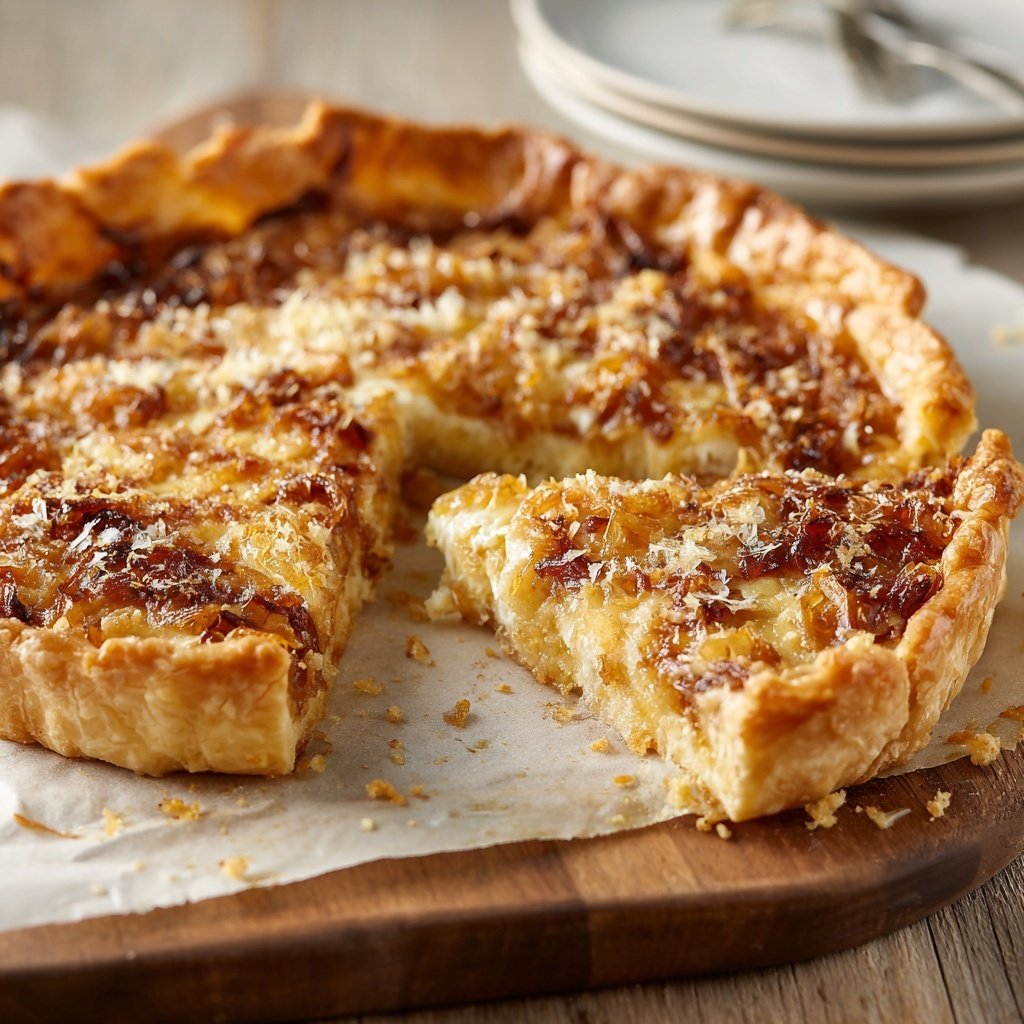
Caramelized Onion and Gruyère Tart
Highlighted under: Oven-Baked Delights
Caramelized Onion and Gruyère Tart
Caramelized Onion and Gruyère Tart
Caramelized Onion and Gruyère Tart
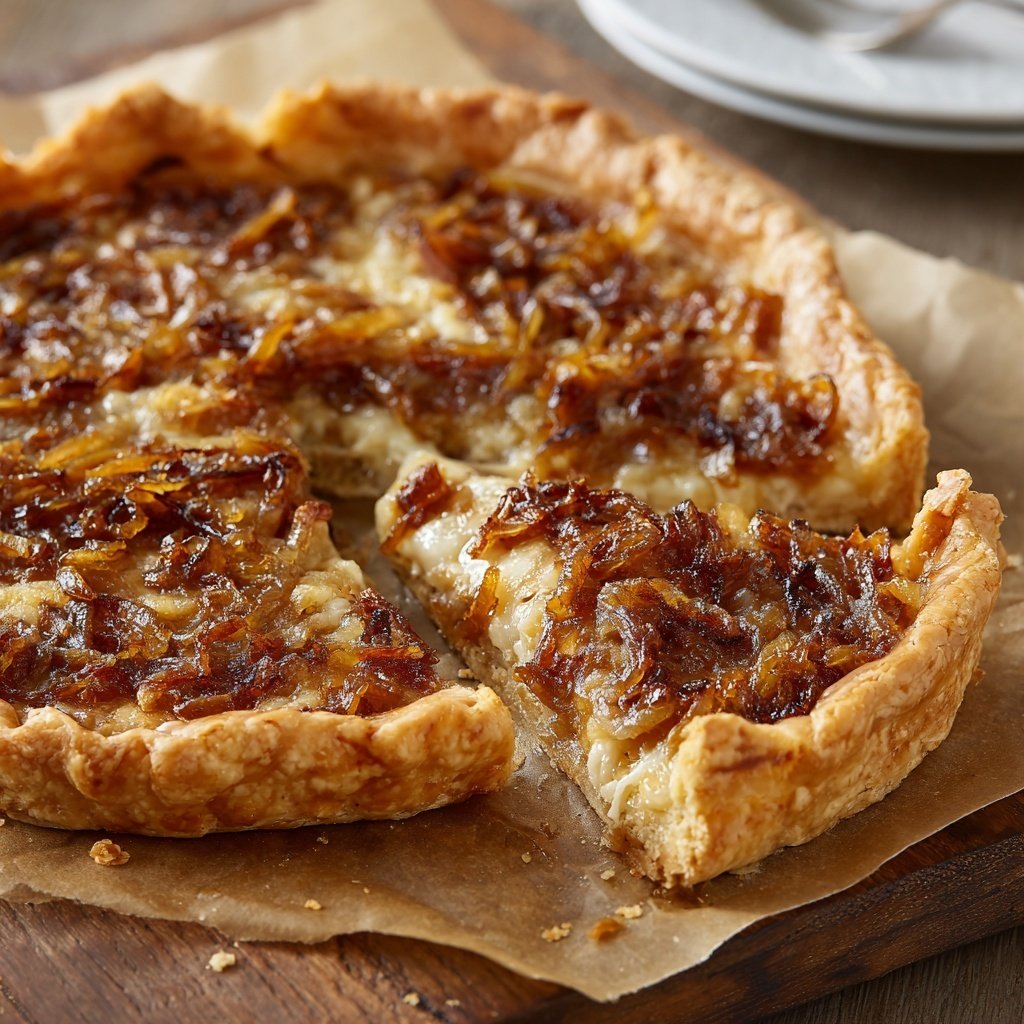
Mastering the Caramelized Onions
For this tart, thinly slice 2–3 large yellow onions to about 1/8-inch thickness so they collapse evenly during cooking. Cook them low and slow over medium-low heat in a wide skillet — start at medium for 2–3 minutes, then reduce to medium-low — and expect 30–40 minutes until deep amber and glossy. Stir every 4–6 minutes; look for visibly translucent strands that begin to brown at the edges. Use a wide pan to encourage evaporation and avoid steaming.
If your onions brown unevenly or taste bitter, the heat is too high. Scrape browned bits and lower to low; add 1–2 teaspoons water or a splash (1 tablespoon) of dry white wine to deglaze and continue cooking. A pinch of salt early helps draw moisture; add 1/2 teaspoon sugar after 15–20 minutes if you want a sweeter profile. For sticky buildup, deglaze aggressively and reduce heat so the sugars mellow without burning.
Choosing and Preparing the Pastry
A sturdy shortcrust or pâte brisée works best to hold the onion and Gruyère topping. Use cold butter cut into roughly 1/4-inch cubes and pulse just until pea-sized in a food processor; add minimal ice water (2–3 tablespoons) so the dough isn’t wet. Chill the disk for at least 30–60 minutes before rolling. Blind bake at 375°F (190°C) with pie weights for 12–15 minutes until the edges are golden; remove weights and bake another 4–6 minutes for a dry surface.
Soggy bottoms are a common failure with wet fillings. Prevent this by par-baking thoroughly and brushing the hot shell with a thin egg wash or a 1:1 mix of melted butter and flour to seal. Alternatively, layer a thin scatter of grated Gruyère or a light dusting of panko before adding onions; the cheese melts into the crust and creates a moisture barrier while contributing flavor and a crisp base.
Cheese, Custard, and Assembly
Choose a medium-aged Gruyère for nutty complexity and reliable melting; shred it finely so it melts uniformly into the onion layer. Use roughly 1 to 1 1/2 cups shredded Gruyère for a standard 9-inch tart. Press half the cheese into the prebaked shell as a barrier, spread the caramelized onions evenly, then top with the remaining cheese. This sandwiching prevents the onions from seeping directly into the pastry while ensuring a cohesive, gooey interior and crisped top edges.
If your tart uses an egg-cream custard, a reliable ratio is 3 large eggs to 3/4 cup heavy cream for a standard tart — whisk until smooth and season lightly with nutmeg and black pepper. Bake at 350°F (175°C) for 25–35 minutes depending on depth; look for a slight wobble in the center and golden edges. If the top browns too fast, tent loosely with foil and continue until the center firms to avoid overcooking.
Substitutions and Dietary Swaps
If Gruyère isn’t available, Emmental or Comté are close in flavor and melting behavior; use the same shredded volume. For a sharper profile, blend 3/4 cup Gruyère with 1/4 cup aged cheddar. For lower-fat options, use a reduced-fat Swiss and increase baking time slightly to achieve set texture. Keep in mind that lower-fat cheeses release more moisture, so add 1–2 tablespoons extra flour to the pastry or a thin pre-bake cheese layer to protect the crust.
To make a dairy-free version, substitute a firm vegan cheese designed to melt (look for coconut oil plus starch-based blends) and use an aquafaba- or silken-tofu-based custard: blend 12 ounces silken tofu with 2 tablespoons olive oil, 2 tablespoons nutritional yeast, and 2 eggs’ worth of chia/flax binder to approximate richness. Expect a slightly different texture and add 5–10 extra minutes baking time at 350°F (175°C) until the custard feels set beneath a golden surface.
Make-Ahead, Storage, and Reheating
Caramelized onions keep exceptionally well: refrigerate in an airtight container up to 5 days or freeze in 1-cup portions for up to 3 months. When assembling a make-ahead tart, blind-bake the shell and refrigerate cooled prebaked crust for up to 24 hours before filling. Assemble just before baking to preserve flakiness. If you must assemble and chill overnight, dock the shell lightly and return to a hot oven for 6–8 minutes before adding fillings to avoid a soggy interior.
To reheat slices, set oven to 325°F (160°C) and warm on a baking sheet for 10–15 minutes from refrigerator temperature; this revives the crust without drying the interior. Avoid microwaving — it will turn the crust limp. For frozen tart slices, thaw overnight in the refrigerator, then reheat at 350°F (175°C) for 15–20 minutes. If you want the top crispier, broil for 1–2 minutes, watching closely so the cheese doesn’t burn.
Serving, Pairings, and Variations
Serve the tart warm or at room temperature; cutting into wedges when slightly cooled (10–15 minutes) yields cleaner slices. Pair with a peppery arugula salad dressed in lemon vinaigrette to cut richness, or serve alongside a light white wine such as a dry Riesling or Chardonnay at 50–55°F (10–13°C). For a brunch service, add a dollop of crème fraîche and a scatter of finely chopped chives for freshness and contrast in texture.
Variations to customize the tart include stirring 1 teaspoon fresh thyme leaves into the caramelized onions during the last 5 minutes of cooking, or folding in 3–4 ounces cooked, crisped bacon for smoky depth. For a slightly sweet-savory twist, add thinly sliced, caramelized pears in one layer with the onions — reduce baking time by 3–5 minutes to prevent over-softening. Scaling up to a 10–11 inch tart pan will increase bake time by about 5–8 minutes; watch the center for doneness.